The challenge: massive telemetry in isolated networks
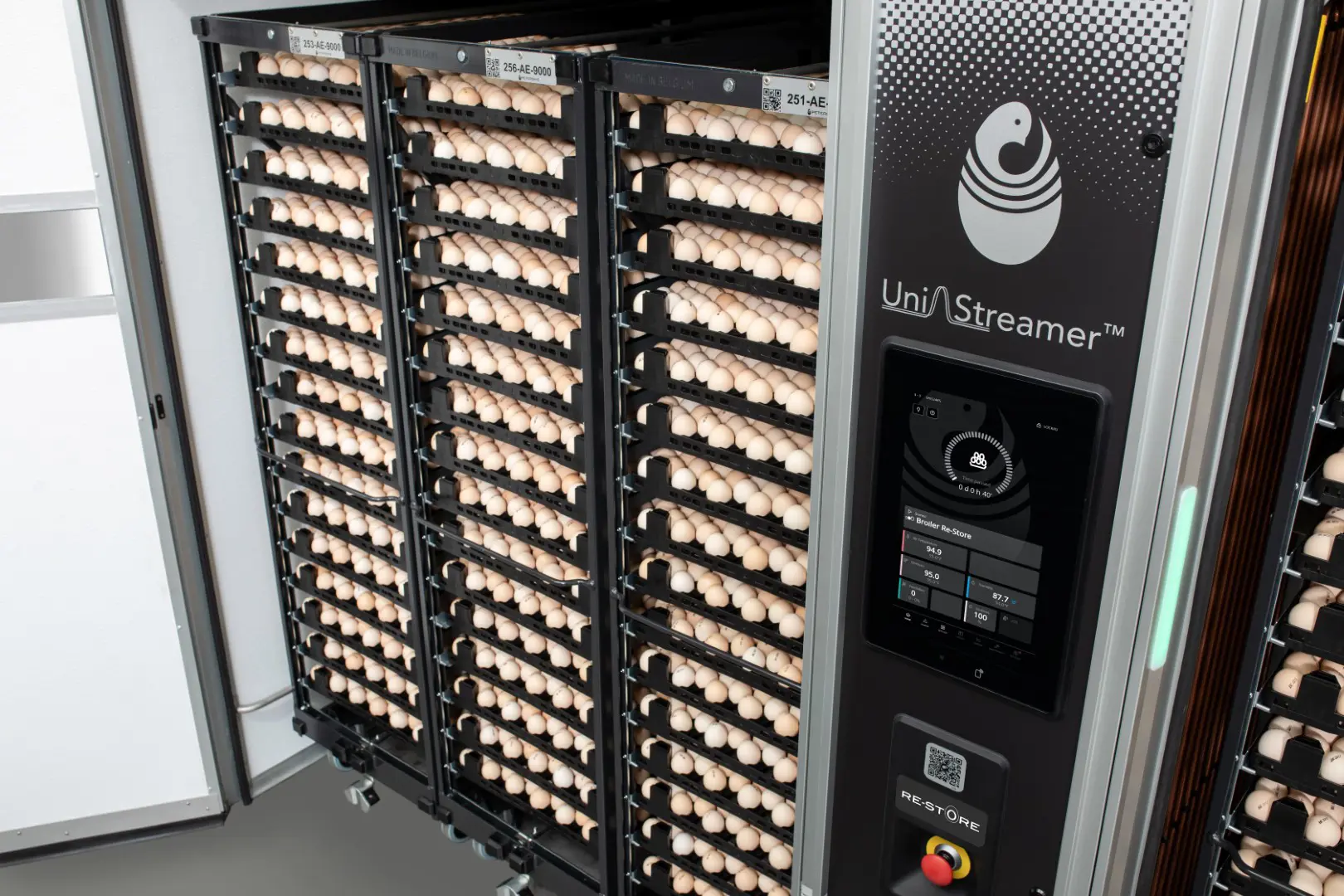
We sat down with software architect Nic Christiaens to hear how Petersime moved beyond custom "plumbing" to a high-performance messaging architecture. He describes a hatchery as a complex ecosystem in which dozens or even hundreds of incubators must communicate with a central edge server over an isolated Ethernet network. Because these messages remain strictly within the local hatchery, a direct cloud connection is impossible.
These incubators generate a constant stream of telemetry and rely on Remote Procedure Calls (RPCs) to function. Originally, Petersime used the built-in AMQP broker in the Azure IoT Edge runtime, but as they scaled, the limits became apparent. The system couldn't handle the sheer volume of messages generated by 100 active units, pushing Nic and his team to seek a more robust, decentralized solution using LavinMQ and RabbitMQ.
The requirements
- Efficiency: Hardware runs on embedded CPUs with very limited resources.
- Security and compliance: Preparing for the future Cyber Resilience Act (CRA) regulations.
- Routing flexibility: A need for easy-to-configure routing, federation, and shovels.
- Reliability: Message retention was non-negotiable to ensure data survival during network unavailability.
Why AMQP and LavinMQ?
While many IoT projects default to MQTT, Petersime chose AMQP 0-9-1 because its sophisticated routing and features better matched their technical needs. Having already seen success with RabbitMQ on their edge servers, the team decided to push the broker further down the chain, directly onto the individual incubators.
"RabbitMQ and LavinMQ are honestly the only decent AMQP brokers to choose from, so the choice was easy." — Nic Christiaens, Software Architect
Petersime chose LavinMQ for the embedded devices because of its incredibly low resource footprint and "out of the box" support for the features they needed most: low latency, easy federation, and high reliability on constrained hardware.

The implementation
Transitioning to an AMQP-based architecture was straightforward. Leveraging the documentation and existing AMQP 0.9.1 libraries, the team was able to move away from a custom-made fan-out message forwarder to a standardized, flexible broker setup on every device. When a technical issue arose during the implementation of LavinMQ, the team found the support they needed immediately. "The dev team was very responsive and awesome to work with," Christiaens noted.
The result: focusing on the software that matters
By deploying LavinMQ on the incubators and RabbitMQ on the edge server, Petersime has eliminated the burden of maintaining a custom messaging system. The transition hasn't just provided a more stable environment for their telemetry and RPCs; it has fundamentally changed where the engineering team spends their time.
"It takes away the concern of having to write your own messaging system. It allowed us to focus more on the software that matters most to us and leave message routing to the experts."
Today, Petersime runs well within the limits of its infrastructure — with plenty of headroom to grow into the next generation of industrial hatcheries.

Jeff Hara
Customer Success Manager
Hi, I'm Jeff, and I'm here to help
Curious about what CloudAMQP can do in your architecture?
Reach out to us and let us help. The consultation is free, and we'll ensure you get in touch with one of our experienced architects. / Jeff
Contact us today